The International Labour Organization’s (ILO) annual International Labour Conference is currently underway at the United Nations in Geneva. Sweden is represented this year by several officials from the Unit for EU and International Affairs (EUI), who are engaged in negotiations concerning, among other matters, the proposed convention on platform work.
The Conference, held each year in Geneva, constitutes the ILO’s highest decision‑making body and brings together governments, employers, and workers in tripartite negotiations. This year’s agenda includes the finalization of a convention on decent work in the platform economy, a resolution on social dialogue and tripartism, and a resolution addressing gender equality in working life.
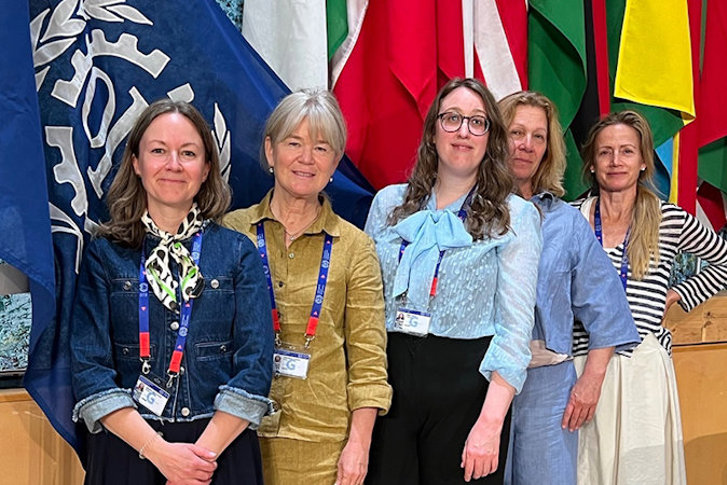
The Swedish government delegation consists of Maria Westman‑Clément, Emelie Barbou des Places, Johanna Ingschöld, Karin Söderberg, and Lisa Svensson. For Johanna, this marks her first participation at the United Nations in Geneva, where she is involved in the negotiations on the platform work convention.
“I participated in the negotiations on the EU Platform Work Directive, and those discussions were demanding until the directive was ultimately adopted. These tripartite negotiations in a UN context, however, add an additional dimension to the process. Now, 187 countries and labour‑market actors must reach agreement on conditions within the gig economy, and the use of job‑platforms varies significantly across the world. It is therefore a time‑intensive and challenging undertaking, yet at the same time highly instructive and rewarding to be present in Geneva for these convention negotiations,” Johanna explains.
In addition to the concluding negotiations, this year’s Conference is also reviewing member states’ compliance with ILO conventions. Among the cases under examination are the application of Convention No. 87 on freedom of association and protection of the right to organise in Russia and Belarus, as well as Mali’s implementation of Convention No. 182 on the prohibition and immediate elimination of the worst forms of child labour.